

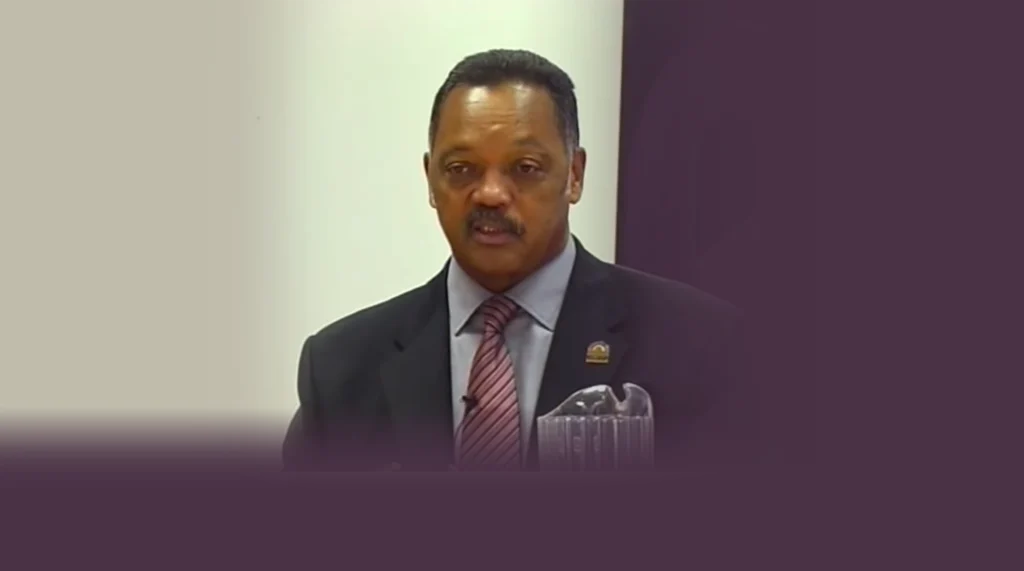
Richard Reddie, Director of Justice and Inclusion, Churches Together in Britain and Ireland, pays tribute to Revd Jesse L Jackson, the civil rights leader and activist who has died at the age of 84.
The sad, but not unexpected passing of Revd Jesse L. Jackson arguably sees the closing chapter of what many consider to be the modern civil rights movement in the USA. It would be totally apposite to describe Revd Jackson as a titan for equality, justice and freedom, not only in the USA, but around the world. When I was growing up, he was a living legend; second only to Revd Dr Martin Luther King Jr, as a Christian who championed racial equality and justice. While Dr King never directly impacted my life, Jesse Jackson did, in so many ways.
Jesse Jackson was a Baptist minister who was equally at home in the pulpit as he was on the campaign trail; indeed, his charisma, oratorical brilliance and leadership savvy saw him naturally segue from the church into party politics.
Many remember Jackson as one of those who was at Dr King’s side when he was assassinated on 4 April 1968; he often mentioned that he was one of the last people to speak to the great civil rights leader before his murder. However, Jackson should also be remembered as the person who encouraged the King-led Southern Christian Leadership Conference (SCLC) to widen its approach, and focus its attentions on the northern US cities, which did not have state-sponsored segregation, but were still rife with racism. As a result, Jackson moved north to Chicago and established Operation Breadbasket, which put economic/consumer pressure on the businesses in Chicago to hire Black staff, and invest more in the city’s Black community. In time Dr King would follow suit, and moved his entire family to the Lawndale district of southern Chicago, which was an impoverished Black area. It must be noted that Jackson was one of a long list of Christians who used the Bible as their loadstar to engage in a justice struggle in the USA.
Jackson went on to establish the Rainbow/Push Coalition which had the aims of encouraging Black empowerment, but also racial and ethnic reconciliation. At a time when ‘race’ related matters were becoming even more polarised, Jackson was reaching out to poor White, Hispanic and First Nations (indigenous) communities to join with African Americans in addressing the inherent inequalities that were manifest in US society. In time, this work would lead to Jackson running for public office. Unlike Dr King, who never ran for public office, Jackson made two bold, but ultimately unsuccessful bids to run for US President.
Running on a Democratic ticket, in 1984 Jackson appealed to vast swathes of working and middle-class Americans who had been left-behind by ‘Reaganomics’ – growing unemployment and unaffordable health care. He came third behind Walter Mondale (who would run against the Republican incumbent, Ronald Reagan) and Gary Hart. Four years later, he ran again, this time losing to Michael Dukakis. However, his real political legacy was inspiring Black folks to run for public office, especially those from church backgrounds. Jackson was Black, and America was less then two decades out of segregation, so he stood very little chance of becoming President. Nonetheless, the fact that he had the courage and nous to undertake such an audacious act, was inspiring and of incalculable worth. It would be no exaggeration to suggest that he blazed a trail that led to Barrack Obama winning the US Presidency and Kamala Harris seeking to do a similar thing a few years ago.
I had the pleasure of meeting Jesse L. Jackson on two occasions, both almost two decades ago. At the time I was working for Churches Together in England, and Jackson was visiting these shores to meet with various civil society organizations, including Churches Together in Britain and Ireland (CTBI). At the first meeting, at the CTBI offices in Waterloo, Jackson spoke about his forthcoming work in the UK. I must confess, I heard very little of what he said; I was focusing on how I could meet him, and possibly get my photo taken with him. (I managed to do both.) At the second meeting, at St John’s church, also in Waterloo, I had more of an opportunity to speak with him. He was keen to see a greater number of Black students attend good universities, and was working with British organisations and Regents College, Oxford, to make this happen. He was as engaging in person as he was on television or radio, making you feel as if you were the only person in the room, and the most important person in the room. (I also managed to get another photo with him!)
Jackson also played a pivotal role in the establishment of Operation Black Vote, which encourages Black and Asian Britons to be active citizens, by registering to vote, and also running for public office.
Jesse Jackson was no saint, but his work on civil rights and public service reveals the importance of integrity and consistency in public life. The very things he stood for when he first came to national prominence, were the very same matters he championed right up to the end.
Finally, Jackson was a Christian who saw in Jesus the epitome of hope and transformation – all things were possible because of Jesus’ victory on the cross. As such. Jackson believed that we needed to ‘Keep hope alive’, and that although life can be full of things that knock you down, ‘The ground is no place for a champion’, so we need to get up and continue the fight!
Jesse Jackson’s ‘fight’ in this life is no more. May he take a well-earned rest with his Saviour. However, I am sure he would want us to finish the work he carried out so well during his well-lived life.
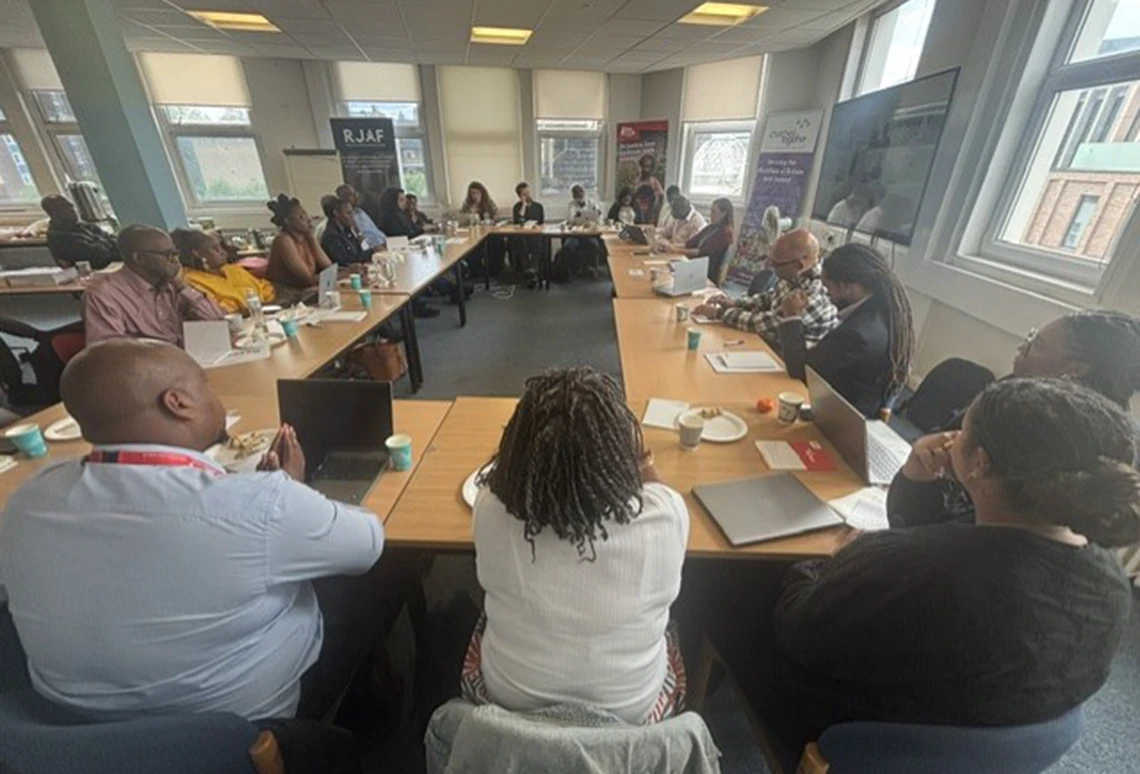
Report of the visit of the Jamaican delegation to Britain to make the case for reparations.
Members of the Racial Justice Advocacy Forum are deeply saddened by the death of Professor Jason Arday.
Get ready for Black History Month - October 2026. Resources are available to download.

Churches are encouraged to take part in events to mark Windrush Sunday – Sunday 21 June 2026.