

S. Wesley Ariarajah was a Methodist Minister from Sri Lanka, and Professor of Ecumenical Theology at Drew University School of Theology, Madison, New Jersey, USA. He is now retired.
Some Ecumenical Reflections on an important text
Inter Faith Relations and dialogue have become an important part of how Christians live out their faith in the world. Friendships are built in local communities and faiths come together at important times in the life of communities and in the life of the nation. The presence of other faiths at the funeral of Her Majesty Queen Elizabeth II was the most visible sign that religious pluralism is an irreversible feature of Western society.
But how might Christians take full account of this pluralism and how should they understand the relationship of the Church to other faiths? This is not a new question; indeed Christianity came to birth in the context of religious pluralism within the Roman Empire. However, these theological reflections came to have a particular focus when churches and mission agencies proclaimed the gospel in a context where another religion was dominant. And this colonial history is an important issue as we seek to live as Christians in a diverse and plural society.
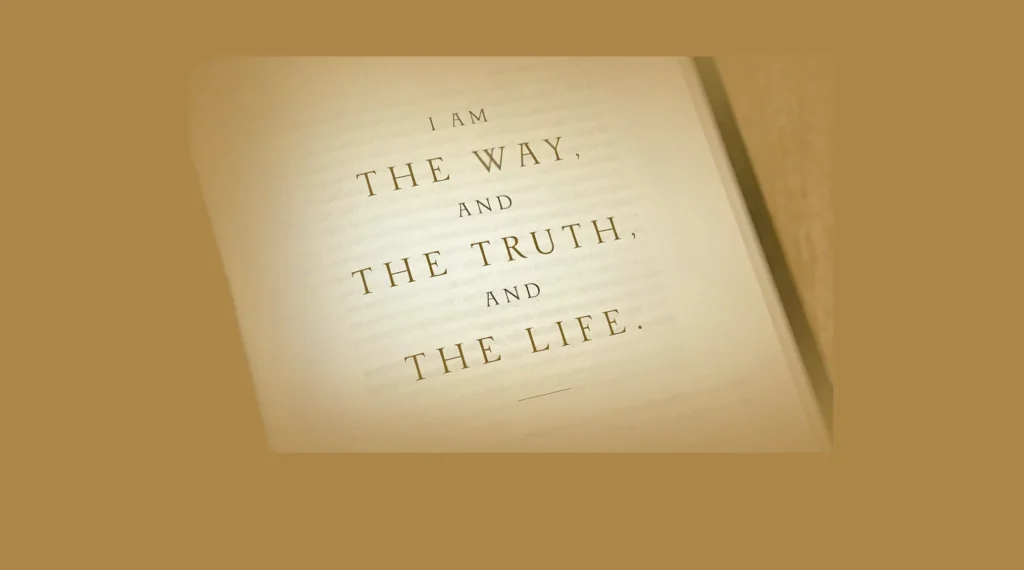
Many Christians will look to the Bible to provide answers and this is surely an important starting point. One scriptural text that often surfaces in discussions with Christians about inter faith dialogue is to be found in the Gospel of John:
Thomas said to him, ‘Lord, we do not know where you are going. How can we know the way?’ Jesus said to him, ‘I am the way, and the truth, and the life. No one comes to the Father except through me. If you know me, you will know my Father also. From now on you do know him and have seen him.’ (John 14.5-7, NRSV)
Many have interpreted this text to mean that faith in Jesus Christ as the Son of God is the only way to salvation. However, over the last 30 years or more scholars and theologians have looked deeper into this text and a variety of different understandings have emerged. These have come not only from Western Theologians but also from those who have been nurtured in the Christian faith in the Global South where they may have undertaken their theological study in a context where Christianity is a minority faith.
Over the next few months we will be publishing a series of papers, articles and reflections on this text from different perspectives. These will include theologians from the Global South and from different Christian traditions within the Churches Together family.
Peter Colwell
Perspectives
Published in conjunction with the Inter Faith Theological Advisory Group (IFTAG).
-
 Interpreting John 14.6 In A Religiously Plural Society (PDF, 19.7MB)
 -
John 14 6 reflection – Dr Anne Richards (PDF, 166k)
Dr Anne Richards is National Public Policy Adviser: modern society, popular culture, contemporary society and apologetics. She is part of the Policy Team in the Faith and Public Life department of the Church of England, and convener of MTAG.
-
Understanding the Church and its Mission: Insights from John 14-6 – Elizabeth J Harris (PDF, 233k)
Dr Elizabeth Harris is Moderator of IFTAG; Honorary Senior Research Fellow, The Edward Cadbury Centre for the Public Understanding of Religion, University of Birmingham; President, UK Association for Buddhist Studies; and Former President, European Network of Buddhist-Christian Studies.
-
Christianity is not a notion, but a way: Quaker Perspectives on John 14:6 – Stuart Masters (PDF, 202k)
Stuart Masters is Programme Coordinator (History & Theology), Woodbrooke.
-
Reflection on John 14:6 – Dr Clare Amos (PDF, 157k)
Dr Clare Amos is an Anglican lay theologian with a background in biblical studies. Between 2001-2011 she was Coordinator of the Anglican Communion Network for Interfaith Concerns (NIFCON) and between 2011 and 2018 she worked at the World Council of Churches, Geneva, as head of its interreligious office. She also wrote the 2020 CTBI Lent course ‘Opening the scriptures: setting our hearts on fire.’
-
I am the way, the truth – John Parry (PDF, 57k)
John Parry trained as a Congregationalist in Wales and was ordained as a Presbyter of the Church of Bangladesh. He worked as a Rural Dean and taught in a Bengali theological college, then returned to ministry in Southall for the URC. He later researched for a PhD in Sikh Studies at the University of Birmingham. He taught World Church Studies and World Faiths at Luther King House, Manchester, and spent short periods teaching in Samoa, Taiwan, Madagascar South India and the University of Bangor. He left retirement to minister a small church and was later Director of the London Inter-faith Centre. He has now retired properly.
-
Christian Witness in a Pluralistic World – Renewing Christian Faith – Amos Yong (PDF, 44k)
Dr Amos Yong is Professor of Theology & Mission, Fuller Seminary.
-
Way, Truth, Life as Holy Anarchy – Revd Dr Graham Adams (PDF, 129k)
The Revd Dr Graham Adams is Tutor in World Christianity (including Mission Studies) and Religious Diversity with Northern College (United Reformed and Congregational), a constituent college of the ecumenical partnership, Luther King Centre for Theology and Ministry, in Manchester. He also teaches with the Congregational Institute for Practical Theology. His books include: Holy Anarchy: Dismantling Domination, Embodying Community, Loving Strangeness (SCM Press, 2022) and God the Child: Small, Weak and Curious Subversions (SCM Press, 2024).
'The Language of Love: Church Growth and Interfaith Relations' - Some ecumenical reflections from the Inter Faith Theological Advisory Group.

A toolkit aimed at Christians seeking to initiate or develop interreligious dialogue in their local communities or contexts in which they work.

A resource for Christians to learn more about Jewish-Christian dialogue, antisemitism, and anti-Judaism.

CTBI's Inter Faith Theological Advisory Group (IFTAG) has produced a short resource that offers reflection and pointers for discussion.