


Co-Founder of the Croydon Supplementary Education Project (CSEP)
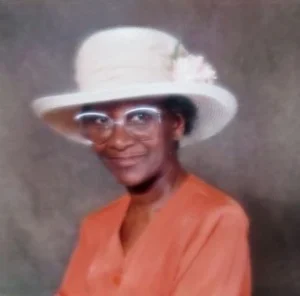 I was born in Camberwell, a village in the Parish of St Mary, in Jamaica in 1930. As a child, I did not like going to school in Jamaica due to the teachers. At the time, teachers in Jamaica would flog children with a cane or leather strap if they did not understand what was being taught. Sometimes I did not understand, and I was always worried about getting flogged. However, my mother insisted that I went to school. At that time, I was living in Kingston, the capital of Jamaica, with some of my sisters and my mother. My father and the rest of the family was living in the countryside, in Camberwell. And although I was born in Camberwell, the schools in Kingston were thought to be better, so my mother took some of the older children to finish their education in the capital.
One day my mother informed me that I was to return to Camberwell, which was the best news I had heard in years. My school in Camberwell was much smaller than the one in Kingston and the classes were fewer in number. The teachers seemed to have more interest in the children. Rather than flogging those who did not understand the lesson, they gave them extra help. From being a child who did not want to go to school, I became one who loved school and enjoyed learning. I began to do very well in school.
In Jamaica at the time, there were three exams you needed to take in order to complete your school education. These were called ‘First Year’, ‘Second Year’ and ‘Third Year’ examinations. Schools would prepare students for these examinations and then all the exam candidates from the various schools in the parish would travel to the main town to take the exam. I passed the ‘First Year’ and ‘Second Year’ exams, but I found studying for the ‘Third Year’ exam very difficult. I failed it on my first attempt. I had a younger sister who was also studying for the ‘Third Year’ exam. She was very bright and had no problem in passing the first time. I remember praying to God to help me to understand the work so that I also could pass ‘Third Year’. This was a very important exam, since I could not go on to become a qualified teacher if I did not pass. God answered my prayer. I began to understand the ‘Third Year’ studies, and passed the second time I took the ‘third year’ examination.
My aim was to attend Mico Teacher Training College in Kingston. Mico was the main teacher training college in Jamaica at the time. It had previously been open only to men and had only just started to admit women. However, before applying to Mico, I had to pass yet another exam. While I was busy studying for this, I was also teaching. First, I was a pupil teacher at Camberwell School, which meant I was an older student who taught younger pupils in the school they themselves attended soon after they completed their schooling. Pupil teachers did not get paid, but they were learning about teaching, and were overseen by the headteacher. After a short time as a pupil teacher, I became a probationary teacher. Probationary teachers were paid, though they were not fully qualified as they had not attended a teacher training college. After being a probationary teacher at Camberwell School, I became a probationary teacher in two other schools: Mahoe Hill and Broadgate schools, which were also in the parish of St Mary.
Finally, I took, and passed the exam to enter Mico Teacher Training College. I spent two years at Mico and left as a fully qualified teacher. I was truly excited to start my career as a qualified teacher, even though I had had many years’ experience of teaching by this time. My first school was Job’s Hill School, high up in the hills of St Mary. My next school was a little lower down in Devon Pen. After a few years in St Mary, I moved to Kingston and taught in Trench Town, an area made famous by Bob Marley. Trench Town School was very different from the country schools in which I had been teaching. I remembered my experience as a pupil in both Kingston and Camberwell, and knew the difference in terms of having teachers who cared about me, and my learning. I was determined that even in larger classes in a bigger school, students would know that I cared about them and their learning.
In 1964, I left Jamaica to join my husband in England. I thought it would be quite easy to get a teaching job in this country. However, it was not that straightforward. I had to wait for the authorities here to contact the Ministry of Education in Jamaica, and for the Jamaicans to let them know that I was a qualified teacher. In the meantime, I worked in Woolworth’s, a department store, in Oxford Street, London’s main shopping thoroughfare. From time to time, I would ask the education authorities in London about the progress of my application to teach in the capital. I was told that they were waiting for a response from Jamaica. However, I subsequently remembered that I had brought to England a letter from the Ministry of Education in Jamaica stating that I was a fully qualified teacher with many years’ experience. This letter was accepted, and finally I could begin teaching in England!
My first teaching job was as a supply teacher. I went to many different schools as a daily supply. Then I was given a regular supply job at two schools in Peckham, south London. I would go to one in the morning, and the other in the afternoon. I continued this for some years before I was told that if I wanted to continue teaching in London, I would need to train in a UK training college. I spent four years training at Rachel McMillan Training College. After completing that training, I became a teacher at Santley School in Brixton, south London. Fifteen years later, I moved to Lewisham, southeast London, where I became a main teacher with responsibility for overseeing second language learners in primary schools, by supporting teachers to help second language learners to access the curriculum. I stayed in this role until I retired.
Although I was busy progressing in my career, I was very much aware of children who were struggling educationally. I could not overlook them: I remembered the difference that teachers in Camberwell, Jamaica, made to my learning. I did my best to help children in and out of school. Sometimes individual parents would ask me to help their child with reading or maths, and I would do this after school and in the holidays. However, I felt that more was needed. Indeed, one day, as I was waiting to traverse a pedestrian crossing in Croydon, south London, I saw a parent I knew standing on the other side of the road. She was waiting for me, and her first words were: ‘What are we going to do about these children?’ She was talking about Black children in Croydon who seemed to be failing at school. A conversation then followed during which I promised to help in any way that I could.
At the same time, Andy Johnson, a secondary school teacher was also concerned about the same situation. He was already in conversation with the council to see if accommodation could be provided for a Saturday school. The council eventually provided a few rooms in a building on Wellesley Road in Central Croydon, and in 1981 we established the Croydon Supplementary Education Project (CSEP). The Project began with five students. Andy taught the secondary school students, and I taught the primary aged children. Within a year the project grew until we were turning away children. The numbers of teachers also grew, as teachers who were concerned with the education of children in Croydon volunteered to teach at the school on Saturday mornings. Over time, teachers were given a small stipend for their work.
I have long retired from CSEP, but the project is still going strong. It is my delight to attend the prize giving ceremony each year and to see the continued enthusiasm of staff and students, which now also include adult learners. The curriculum has widened beyond my dreams. It is my hope that CSEP continues to be a blessing to the children, youth and adults of Croydon for many years to come.
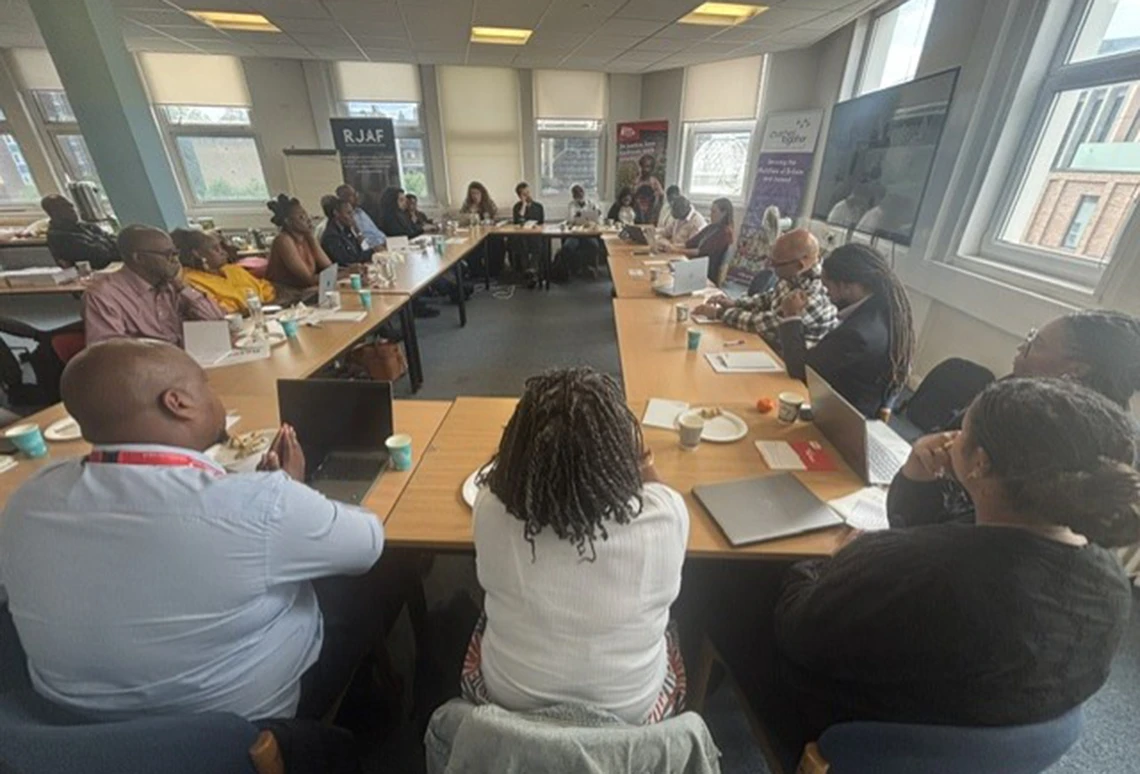
Report of the visit of the Jamaican delegation to Britain to make the case for reparations.
Members of the Racial Justice Advocacy Forum are deeply saddened by the death of Professor Jason Arday.
Get ready for Black History Month - October 2026. Resources are available to download.

Churches are encouraged to take part in events to mark Windrush Sunday – Sunday 21 June 2026.