

Richard Reddie, Director of Justice and Inclusion, Churches Together in Britain and Ireland (CTBI), reflects on Jesus and Blind Bartimaeus in Mark 10: 46 – 52, for Black History Month.
You can read the sermon below or download.
Download
Black History Month 2024 sermon
Jesus and Blind Bartimaeus
Mark 10: 46 – 52
This passage of Scripture is well known to many, and explores Jesus’ encounter with a blind man called Bartimaeus, as he was leaving Jericho on his way to Jerusalem, where he would be crucified. This Bible passage, which akin to all scripture, is divinely inspired, is also apt for Black History Month, which we celebrate in October.
The story begins with Jesus and his disciples, who were leaving Jericho and were being followed by a large crowd. If you know anything about Mark’s Gospel, then you will know that the writer constantly mentioned the crowds that followed Jesus as he travelled from town to town sharing the Good News.
We read that a blind beggar, a man named Bartimaeus was sitting by the roadside. In such a society, with no welfare state, the only way a blind person could survive was by begging, and Bartimaeus was no exception. In John 9: 1-12, we read about another beggar who Jesus healed by the Pool of Siloam. What was interesting about Bartimaeus was that we know his name. Often, many of the people who Jesus healed were not named. Think of the unnamed woman in Mark 5:25–34 who touched Jesus’ garment and was healed, or the aforementioned beggar by the Pool of Siloam.
But we know Bartimaeus’ name, which in Hebrew meant ‘Son of He Who’s Highly Prized’, or ‘Son Of Honour’. A good name, but rather an incongruous one for a beggar. Names are important; they often have meanings. How many of us know the meaning of our names? Or the meaning of the names we gave to our children? In certain cultures, names signify a person’s standing in society or within a community. That is the case within African communities in particular. For instance, Kwasí as in Kwasi Kwarteng, the former Chancellor of the Exchequer, is from the Ghanaian ‘Ashanti day-naming system’ for men, meaning ‘born on a Sunday’. In Ashanti culture, people born on particular days are supposed to exhibit the characteristics, or attributes and philosophy, associated with that day.
As we know from the Transatlantic Slave Trade (TST), one of the ways of robbing a person of their identity is by taking their names from them and giving them other ones. And one of the tragic, appalling features of the TST was that enslaved Africans were often given new ‘names’ that ridiculed or undermined them. Imagine the cruel irony of being called Hercules, Zeus or Caesar – names associated with gods, demi-gods and emperors respectively, when you were a powerless slave.
Back to the story! We see that Bartimaeus regarded Jesus as someone who could restore the honour that he had lost; someone who could make him whole again, and when he heard that Jesus was passing by, he began to shout, ‘Jesus, Son of David, have pity on me.’ Note that he called Jesus, ‘Son of David’, which showed that he knew that Jesus was the chosen one, like David, and had the power to heal him. But the people in the crowd told him to shut up. I’m not sure if you are aware of this, but there is a Jamaican translation of the New Testament Bible. In that version, it says the crowd told Bartimaeus to ‘Shot im mout an tap im naiz’ (basically, shut up!). As far as the crowd was concerned, Jesus was too important to engage with this blind beggar.
However, all this served to do was to get Bartimaeus to shout even louder, and he did this until he got Jesus’ attention. What was important was that Jesus stopped his journey: we know that the Lord was on a mission, but Bartimaeus was also important enough for him to break that journey. And then Jesus did an amazing thing: he ordered the very people who were telling Bartimaeus to shut up, to bring the blind man to him. Imagine the wonderful irony of this, and how those individuals in that crowd felt. We know how Bartimaeus felt – he leapt to his feet and made his way to Jesus. It is also important to note that he left his coat behind because he knew that he would not need that again for begging, as Jesus would change his life for the better.
So, everything stops, it was all about this man and Jesus. The man who was once on the margins of life, begging, was now the centre of attention. Jesus then asked him an obvious, but important question, ‘What do you want me to do for you?’ We know that sometimes, what people want and what people need are not the same. However, this was not the case with Bartimaeus. He responded to Jesus’ question by saying he wanted, ‘to see’, and Jesus obliged him.
What was also important was that Bartimaeus, after he was healed, followed Jesus, probably all the way to Jerusalem to his crucifixion. In many other instances, those who were healed went their own way, but in this case, Bartimaeus followed Jesus.
This story tells us so much, and we can learn a lot from the central characters. We see the large crowd – we often associate crowds with followers or supporters, but they can be strange places. You can be in a crowd yet still feel lonely. But what about those who are excluded from the crowd – not part of the ‘in crowd’ – they are often on the margins, considered outcasts – people who are not valued or wanted. In today’s story, the crowd did its best to silence Bartimaeus and keep him from receiving the assistance he needed and wanted. Are we ever like that, hindering those who need help? Or, are we in a position to provide help, but unlike Jesus, too busy, and fail to pay attention to those who need our assistance?
Equally, are we like the others in the crowd who used the opportunity to guide Bartimaeus to Jesus with the hopeful words, “Take courage; get up; he’s calling you!”? As Christians, we should always stand up for justice, and help those in need of it, to get it.
And then there is Jesus, who has compassion by the bucketload, and all the time in the world for those on the margins. He stopped his vitally important mission to attend to someone who was ignored by most of the community. Jesus not only healed Bartimaeus, but he also brought him in from the margins into the heart of things. There is little doubt that the Good News of our Lord Jesus Christ has the power to transform lives spiritually, emotionally and physically.
Finally, there was Bartimaeus, who would not take ‘no’ for an answer. He would not be silenced and insisted that his voice should be heard, even if it meant upsetting some in society. Black History Month has been an occasion to hear the voices of those who have long been silenced or ignored. Over the many years, it has brought forms of history in from the margins to the point where those stories are now considered mainstream history. While it is still ‘Black history’, it now belongs to all the community. When Jesus healed Bartimaeus he restored him back to the community – where he truly belonged.
As the people of God, justice demands that we ensure that people’s voices are heard, especially those on the margins, and that we work to make sure they are valued participants in community life. And unlike Black History Month, which is only celebrated for 31 days in the year, our work should take place throughout the year. Let us be the ones who say: ‘Take courage, he [Jesus] is calling you’; he wants to change your life.’
Amen.
The Conference of European Churches is seeking a Programme Officer, for its Dialogue and Advocacy programme area.
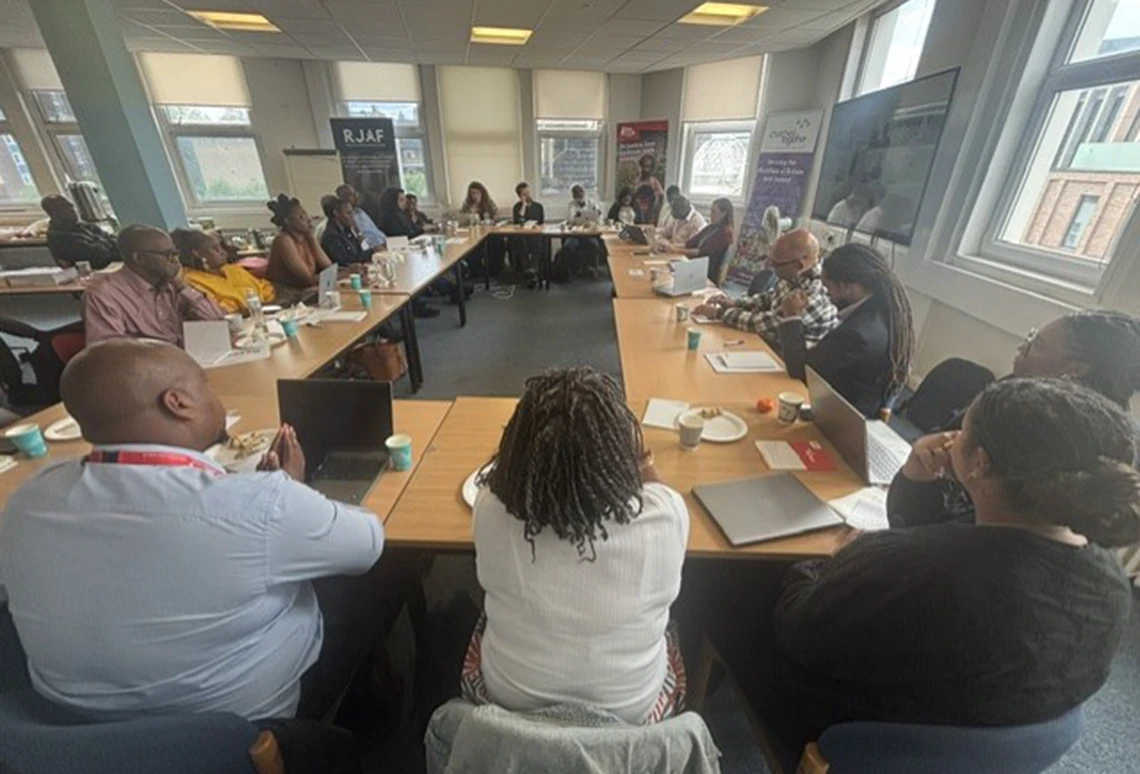
Report of the visit of the Jamaican delegation to Britain to make the case for reparations.
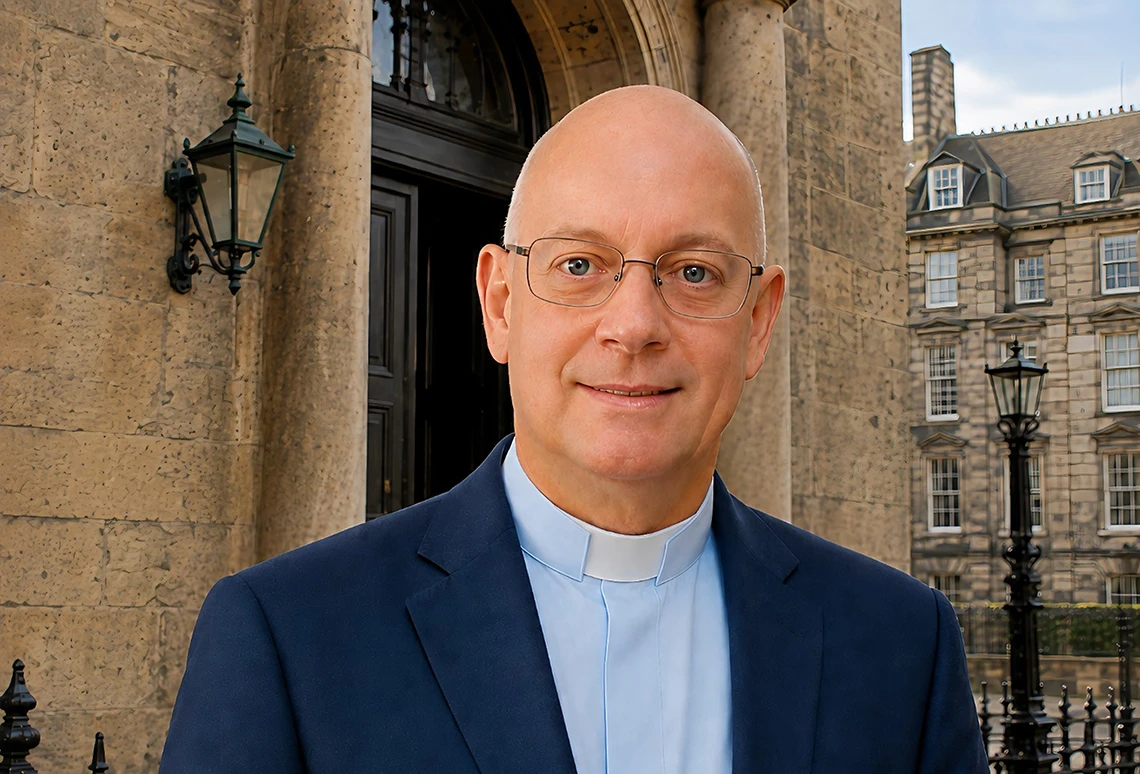
Churches Together in Britain and Ireland (CTBI) is pleased to announce the Revd Dr Adrian Burdon as the new Moderator of its Board of Trustees.
Find out about the latest initiatives from The Synergy Network and its work to help end Violence Affecting Young People in Britain and Ireland.